
Nickel Alloy · Austenitic · Duplex Steel

Committed to global industrial innovation with more stable high-quality products and more efficient professional services.

UNS R52400 Gr.7 ASTM B381 Titanium Blind Flange FF

TTFF01 - UNS R52400 Gr.7 ASTM B381 Titanium Blind Flange FF

Get A Quote

UNS R52400 Gr.7  ASTM B381 Titanium Blind Flange FF


CommodityBlind, Welded Neck, Slip on, Socket Weld, Plate...
Process MethodForged
GradeGr.7/UNS R52400、GR.1/UNS R50250、GR.2/UNS R50400、Gr.5/UNS R56400、GR.9/UNS R56320...
StandardsASTM B381...
Size RangeOD: 21.3-2032mm; DN15-DN2000; 1/2''-80''
TolerancesAccording to the specification or customer's request and drawings
InspectionPMI, dimensional inspection, visual inspection, PT
CertificatesISO/PED


Why Choose MTSCO Gr.7 Flange?

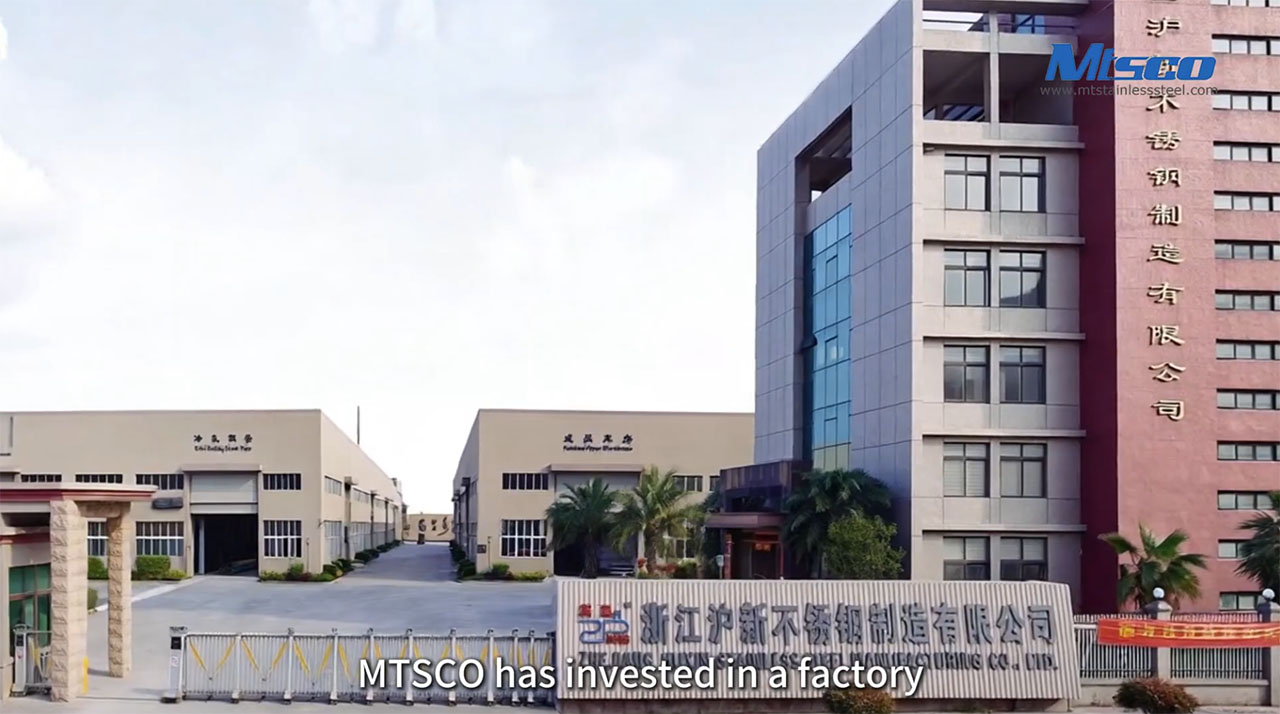
MTSCO’s flange products are supported by a stable supply system from the Factory Complex network. Since 2018, MTSCO has invested in its own flange manufacturing facility, Yongheng Steel. The factory covers an area of approximately 5,000 square meters and has a monthly production capacity of up to 300 tons, enabling it to meet both routine orders and bulk project demands simultaneously. The facility is equipped with advanced production machinery, including CNC machine tools, CNC drilling machines, cutting equipment, and air hammers, enabling machining precision down to 0.1 mm, which effectively ensures dimensional accuracy and product consistency. Through solution treatment processes, the mechanical properties and stability of the products are further enhanced. Leveraging MTSCO’s supply chain coordination capabilities, the factory is able to provide flange products with superior cost-effectiveness and supports various international standards—including ASTM, ASME, DIN, EN, JIS, and BS—as well as customized production requirements.


Quality Control of Titanium Flange:

1. Secondary Inspection of Raw Materials
All raw materials are sourced from certified steel mills and come with MTC certificates. Upon arrival at the factory, the materials undergo secondary inspections, including PMI, visual inspection, batch number verification, and physical and chemical property testing, to ensure they comply with relevant standards and order specifications.
2. End-to-End Traceable Production Management
The entire flange production process—from blanking, forging, and solution annealing to machining—is carried out in strict accordance with process flow sheets. The production process is supervised by experienced engineers and QC personnel, who document and photograph key processes for archiving, enabling full traceability throughout the entire process.
3. Comprehensive Dimensional and Performance Testing
Prior to shipment, flanges undergo dimensional inspection, inkjet code verification, visual inspection, and relevant physical and chemical property testing to ensure that product dimensional accuracy, surface quality, and mechanical properties meet customer requirements and relevant standards.
4. Third-Party Inspection and Quality Documentation Support
MTSCO supports third-party inspection services from SGS, TÜV, and BV. All inspection reports, QC photographs, and container loading records are archived to provide customers with transparent, reliable, and traceable quality assurance support.


mtsco Gr.7 Titanium Blind Flange.jpg


What is ASTM B381 of Titanium Flange?

ASTM B381 is a key standard in the field of titanium and titanium alloy forgings, with the full title “Titanium and Titanium Alloy Forgings.” This standard primarily applies to the production, technical requirements, and quality inspection of open-die and die-forged titanium and titanium alloy forgings, and is widely used in the manufacture of flanges, forged bars, rings, structural components, and high-strength industrial parts.

ASTM B381 systematically specifies material grades, chemical composition, mechanical properties, heat treatment conditions, dimensional tolerances, and inspection requirements. Common applicable materials include industrial pure titanium Gr. 1 and Gr. 2, as well as titanium alloys such as Gr. 5 (Ti-6Al-4V), Gr. 7, and Gr. 9. Different grades offer varying strength levels and corrosion resistance depending on the application, meeting the needs of the aerospace, chemical, marine engineering, and energy industries.

In terms of manufacturing processes, ASTM B381 requires that forgings undergo strict forging and heat treatment controls to ensure uniform internal microstructure, stable mechanical properties, and a reduction in internal defects. The standard places particular emphasis on the strength, ductility, and reliability of forgings; therefore, ASTM B381 products are generally more suitable than ordinary rolled materials for applications involving pressure, stress, and critical joints.

In terms of quality control, ASTM B381 is typically used in conjunction with non-destructive testing (NDT) methods such as material composition analysis (PMI), mechanical property testing, hardness testing, ultrasonic testing (UT), and dimensional inspection to ensure that forgings meet the safety and long-term service performance requirements of industrial projects. Consequently, this standard is one of the most commonly used core standards in export projects involving titanium flanges, forged bars, and high-performance forgings.


In which fields are flanges used?

Grade 7 titanium blind flanges are widely used for port sealing, equipment maintenance, and pressure isolation in highly corrosive industrial piping systems due to their excellent corrosion resistance and reliable sealing performance. As an industrial-grade titanium alloy containing a small amount of palladium (Pd), Gr.7 offers superior corrosion resistance compared to standard Grade 2 titanium in reducing acids, chloride environments, and crevice corrosion conditions, making it particularly suitable for complex chemical and marine environments.
In the chemical and petrochemical industries, Grade 7 Titanium Blind Flanges are commonly used in acid transport systems, reactor interfaces, tank closure ends, and highly corrosive piping systems, and can be used long-term in environments containing media such as moist chlorine gas, hypochlorites, and oxidizing acids. Since blind flanges serve both sealing and pressure-bearing functions, they require high material stability and corrosion resistance; Grade 7 effectively reduces the risk of leaks caused by corrosion and minimizes maintenance frequency.
In the fields of seawater desalination, marine engineering, and power generation and environmental protection, this product is also widely used in seawater circulation systems, FGD desulfurization units, condensers, and heat exchangers at sealed connection points, where it maintains long-term stable operation in environments with high salt fog, high humidity, and chloride ions. Furthermore, the Gr.7 Titanium Blind Flange is suitable for high-purity chemical processing, environmental protection equipment, and special fluid transport systems, and is particularly well-suited for critical industrial projects with high requirements for resistance to pitting and crevice corrosion, as well as long-term operational reliability.

法兰生产流程图flange production process.jpg


FAQ
1. What are the requirements for titanium flanges under ASTM B381?

ASTM B381 is a key standard for titanium and titanium alloy forgings, primarily specifying the chemical composition, mechanical properties, heat treatment, dimensional tolerances, and inspection requirements for forged flanges. This standard emphasizes uniform internal microstructure and consistent mechanical properties, making it particularly suitable for pressure-bearing and critical connection points.


2. What quality inspections are performed on MTSCO’s titanium blind flanges?

All titanium blind flanges undergo material identification (PMI), dimensional inspection, visual inspection, and penetrant testing (PT) prior to shipment. Additionally, relevant physical and chemical property tests are conducted as required by the project. The factory also supports third-party inspection services from SGS, TÜV, and BV to ensure products comply with ASTM B381 and customer technical specifications.

3. Does MTSCO offer customized production of Titanium Flanges?
Yes. MTSCO provides customized production services for flanges with specific dimensions, pressure ratings, and special standards based on customer drawings and project requirements. We support various international standards, including ASTM, ASME, DIN, EN, JIS, and BS, and can accommodate both project-specific orders and bulk purchase needs.


VIP SERVICE

VR (Virtual) Mill Introduction

Professional Remote Technical Guidanceion

Accept Third-party Inspection

Door to Door Shipment

Share This Product:

Related Products: Seamless Tube: Titanium pipe tube sheet bar fitting flange

ASTM B338 Gr.1 Titanium Seamless Tube

ASTM B338 Gr.1 Titanium Seamless Tube

What is GR.1? Grade 1 is classified as industrial-grade pure titanium; among pure titanium grades, it offers the lowest strength but the best plasticity and ductility. Its most notable feature is its excellent corrosion resistance, maintaining stable performance in seawater, chloride environments, ......
ASTM B265 Gr.2 Titanium Strip Pickled

ASTM B265 Gr.2 Titanium Strip Pickled

Material Properties of GR.2: Grade 2 is the most widely used grade of industrial titanium and serves as the benchmark for the overall performance of commercial-grade titanium alloys. Compared to Grade 1, it significantly improves yield strength and tensile strength while maintaining excellent col......
UNS R52400 Gr.7  ASTM B381 Titanium Blind Flange FF

UNS R52400 Gr.7 ASTM B381 Titanium Blind Flange FF

Why Choose MTSCO Gr.7 Flange? MTSCO’s flange products are supported by a stable supply system from the Factory Complex network. Since 2018, MTSCO has invested in its own flange manufacturing facility, Yongheng Steel. The factory covers an area of approximately 5,000 square meters and has a month......
ASTM B861 Gr.1 Titanium Seamless Pipe Annealed

ASTM B861 Gr.1 Titanium Seamless Pipe Annealed

In which fields are titanium pipes typically used? Gr.1 Titanium Seamless pipes are widely used in chemical piping systems, marine engineering, desalination equipment, heat exchanger piping, power plant cooling systems, environmental protection equipment, and other industrial applications that de......
Get A Quote
*Your email address will not be published. Required fields are marked.
*Please enter the verification code and complete reCAPTCHA verification.

Get A Quote
Get A Quote

*Send Inquiry by feedback form learn more about product detail, price, etc.

*Please enter the verification code and complete reCAPTCHA verification.
