 en
en 中 文
中 文 Español
 Português
 Deutsch
 Türk
Türk Pусский
 عربي
عربي 한국인
한국인 日本語
日本語

——Analysis of Standards and Applications for Welded Austenitic Stainless Steel Heat Exchanger Tubes
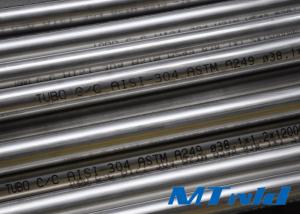
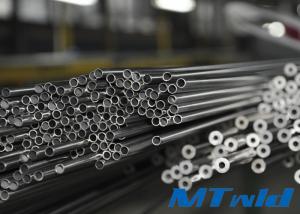
ASME SA249/ASTM A249 welded stainless steel tubing offers excellent corrosion resistance, weld stability, and heat transfer performance for boilers, condensers, and heat exchangers. Widely used in LNG, seawater desalination, petrochemical, and pharmaceutical industries, it is a key material for modern high-efficiency thermal systems.
 ASTM A249 Standard Specification PDF Download
ASME SA 249/ASTM A249 is a key standard for welded austenitic tubes. It is used in boilers, superheaters, heat exchangers, and condensers. It is widely applied in the petrochemical, power generation, pharmaceutical, food processing, and heat exchange equipment industries. This standard primarily covers austenitic welded tubing materials such as TP304, TP304L, TP316L, and TP321, and clearly specifies requirements for chemical composition, mechanical properties, welding processes, and testing.
ASTM A249 welded tubing is typically produced using automated TIG or PAW welding processes. Compared to ordinary industrial welded tubing, this type of tubing imposes higher requirements on weld quality and dimensional accuracy. The standard requires that the weld zone possess mechanical properties similar to those of the base material and undergo eddy current testing, air pressure testing, or hydrostatic testing to ensure the long-term stable operation of heat exchange systems. In the heat exchanger industry, the inner wall finish, concentricity, and wall thickness tolerances of welded tubes directly affect heat transfer efficiency; therefore, high-quality welded tubes play a critical role in equipment performance.
Austenitic stainless steel materials offer excellent corrosion resistance and formability. Among these, TP304/304L is widely used in standard corrosive environments, while TP316L, due to its molybdenum content, exhibits superior resistance to pitting corrosion in chloride-containing environments. TP321, with the addition of titanium, effectively enhances resistance to high-temperature intergranular corrosion, making it suitable for high-temperature heat exchange systems.
According to the ASTM A249 standard, welded tubes typically require solution annealing after production to restore corrosion resistance and microstructural stability in the welded areas. For projects with stringent requirements, additional PMI testing, intergranular corrosion testing, and 100% non-destructive testing may be performed. In practical applications, the service life of heat exchanger tubing is often closely related to the stability of the welds. Industry data indicates that high-quality automatically welded tubing can have a service life exceeding 15 years in heat exchange equipment.
With the development of LNG, seawater desalination, and high-efficiency heat exchange equipment, the demand for ASME SA249/ASTM A249 welded stainless steel tubing continues to grow. Compared to seamless tubing, welded tubing offers advantages in terms of large diameters, long lengths, and cost control, making it one of the key materials for modern heat exchange equipment.