 en
en 中 文
中 文 Español
 Português
 Deutsch
 Türk
Türk Pусский
 عربي
عربي 한국인
한국인 日本語
日本語

Correctly understand the pros and cons and make scientific choices
Coiled tubing is widely used in the oil and gas industry, but it also has certain limitations in high pressure and high fatigue environments. This article systematically analyzes its common problems and explores solutions for optimizing selection and structural improvement.
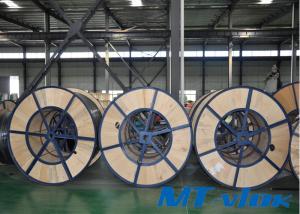
Coiled Tubing is a flexible, continuous, joint-free steel long pipe widely used in oil and gas downhole operations, including acidizing, well washing, wax removal, salvage, pressure measurement, etc. However, despite its advantages of reducing operation time and improving operation efficiency, it also exposes some disadvantages that cannot be ignored in actual engineering applications.
The first is fatigue life limitation. Coiled tubing needs to be bent repeatedly during use (such as winding on a reel or entering the wellbore). This repeated deformation can easily lead to metal fatigue, microcracks, and eventually fracture. Especially in deep wells, horizontal wells or high-frequency operation environments, the problem of shortened fatigue life is more obvious.
The second is limited pressure bearing capacity. Compared with rigid pipe strings, the wall thickness of coiled tubing is thinner, resulting in a lower safety margin in high-pressure environments. When used in deep well operations or when high-pressure fluids need to be pumped in, it is very easy to become unstable, expand or rupture due to increased internal pressure or external well wall pressure, bringing safety hazards.
Furthermore, the corrosion problem cannot be ignored. Especially when operating in an environment containing H₂S, CO₂ or high chloride ions, conventional coiled tubing is often difficult to work stably for a long time, and is prone to pitting, intergranular corrosion and even stress corrosion cracking, which affects the overall service life.
In addition, the manufacturing, transportation and operation equipment costs of coiled tubing are relatively high, and the maintenance process requirements are more stringent. Although its overall life cycle cost is lower than that of some rigid tools, the initial investment and operation requirements should not be underestimated.
In response to the above disadvantages, MTSCO has proposed a systematic solution. We select high-strength and high-corrosion-resistant materials, such as austenitic stainless steel, duplex steel 2205/2507, nickel alloy 625, etc., to effectively improve fatigue resistance, corrosion resistance and pressure resistance. All welded coiled tubing products use precision welding technology, combined with strict eddy current + PMI + water pressure full inspection to ensure that the quality of every meter of pipeline is stable and reliable.
We also provide services such as size customization, short delivery cycle, and strong packaging adaptability, which are suitable for the one-stop procurement needs of global oil service companies and equipment manufacturers. As a professional manufacturer of coiled tubing and control lines, MTSCO has served many international projects and has accumulated rich experience in practical applications. If you are looking for safer, more durable and more adaptable coiled tubing products, please contact MTSCO immediately. Don't let key links slow down the progress of the project. Choose a more trustworthy pipeline solution and start with MTSCO.